
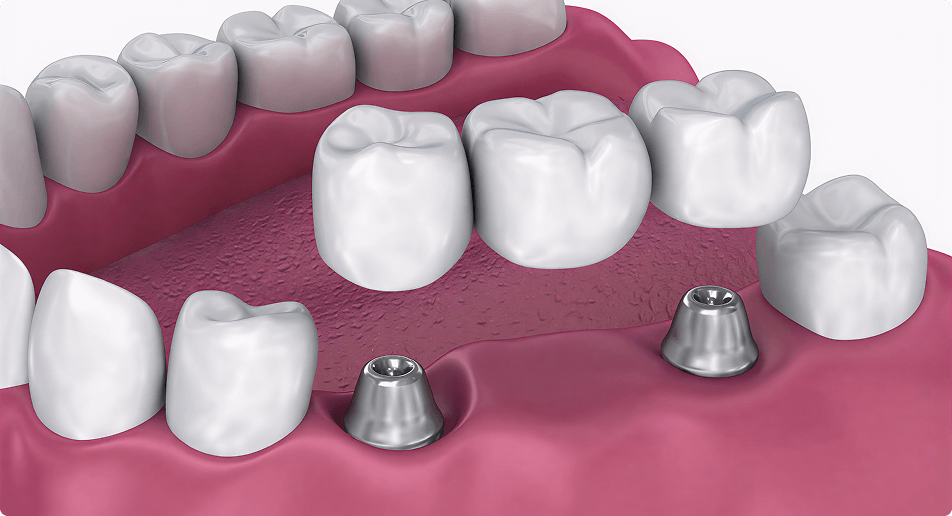
One missing tooth. Two very different ways to replace it. A dental implant replaces the tooth without depending on the teeth around it, while a traditional bridge uses the neighboring teeth for support.
That difference can make the choice more personal than it first appears. If the teeth beside the gap are healthy, preserving them may be part of the conversation. If they already need crowns, a bridge may make more sense to consider. The amount of bone under the missing tooth and how much treatment you’re comfortable with can change the picture, too.
So, when comparing a dental implant vs. bridge, the better option depends on what’s happening around the missing tooth. Here’s what can actually make the difference.
Dental Implant vs. Bridge: What’s the Difference?
The biggest difference is where the replacement tooth gets its support.
A dental implant is placed in the jawbone where the missing tooth used to be. As it heals, the implant integrates with the surrounding bone and acts as the foundation for a replacement tooth. Because it has its own support, an implant doesn’t need the teeth on either side of the gap to hold it in place.
A traditional dental bridge takes a different approach. The replacement tooth sits in the gap and is connected to crowns placed over the neighboring teeth. Those teeth are prepared so they can support the bridge.
That difference matters most when the teeth beside the gap are healthy. A traditional bridge usually requires some natural tooth structure to be removed to make room for the supporting crowns, while an implant can leave those teeth alone.
There’s also a difference below the gums. An implant replaces the missing tooth root as well as the visible tooth, while a traditional bridge replaces only the part you see above the gums. Because the implant sits in the jawbone, it can also help maintain the bone in that area after a tooth is lost.
Which Is Better: A Dental Implant or a Bridge?
If the teeth beside the gap are healthy and there’s enough bone to support an implant, a dental implant may have an important advantage: it can replace the missing tooth without requiring work on the neighboring teeth. But change those circumstances, and a bridge may make more sense.
For example, if the teeth on either side of the gap already need crowns or significant restorative work, using them to support a bridge may fit naturally into the treatment they already need. A bridge may also be worth considering if implant surgery isn’t a good option for you or if getting the tooth replaced sooner is a priority.
There isn’t a better choice based on the missing tooth alone. The condition of the teeth beside it, the amount of bone available, and what each treatment would involve for you are what really shape the decision.
What Happens to the Teeth Next to a Bridge?
With a traditional dental bridge, the teeth on either side of the gap are reshaped to make room for crowns. Those crowns become the anchors that hold the replacement tooth in place.
If those teeth are healthy, that’s worth thinking about. Some natural tooth structure has to be removed to fit the crowns, and that change is permanent. The supporting teeth also remain responsible for holding the bridge, so keeping them healthy becomes especially important over time.
But if one or both of those teeth already have large fillings, damage, or need crowns anyway, the decision can look different. In that situation, the crowns they’d need anyway can double as support for a bridge.
A dental implant avoids this part of the process because it has its own support in the jawbone, allowing the neighboring teeth to remain untouched.
What If You Don’t Have Enough Bone for a Dental Implant?
Not having enough bone doesn’t always rule out a dental implant, but it can add another step to the process.
An implant needs enough healthy jawbone to stay stable. If a tooth has been missing for some time, the bone in that area may have started to shrink because it no longer has a tooth root to support. Bone loss can also be related to gum disease, previous infection, or the condition that led to losing the tooth in the first place.
If there isn’t enough bone for an implant, a bone graft may be recommended to rebuild the area before or, in some cases, at the same time as implant placement. That can extend the treatment and healing timeline.
An exam and dental imaging can show whether there’s enough bone to place the implant as planned or whether grafting would be needed first. If a bone graft adds another procedure and more healing time, that becomes part of the decision when you’re weighing an implant against a bridge.
Which Takes Longer: A Dental Implant or a Bridge?
A dental bridge is usually the quicker route. It can often be completed within a few weeks, while a dental implant typically takes several months from placement to the final crown.
That may sound like a long time, but most of it is actually spent healing, not sitting in the dental chair. Once the implant is placed, the bone needs time to grow around it and create a stable foundation for the new tooth, which is why dental implant healing can take several months. This is called osseointegration, and it’s a part of the process that shouldn’t be rushed. If you need a bone graft before the implant can be placed, you may need some additional healing time as well.
A bridge skips that healing period. The teeth beside the gap are prepared for crowns, impressions or digital scans are taken, and a temporary bridge may be placed while the final one is being made.
And if you’re leaning toward an implant but worried about having a visible gap for months, you may not have to. Depending on the tooth and your treatment plan, a temporary tooth may be an option while the implant heals underneath.
How Long Do Dental Implants Last Compared With Bridges?
A traditional dental bridge typically lasts about 5 to 15 years, although some last longer with good care. Dental implants can last considerably longer. In long-term research, more than 90% of implants were still in place after 10 years.
There’s an important distinction here, though: the implant and the crown on top of it aren’t the same thing. The implant is the part anchored in the jawbone, and it may remain there for many years. The crown that gives you the visible replacement tooth can wear over time and may eventually need to be replaced.
A bridge works as one connected restoration, with the replacement tooth supported by crowned teeth on either side. Its lifespan therefore depends partly on those supporting teeth. If one develops decay, fractures, or has another problem beneath the crown, it can affect the bridge as well.
Those numbers aren’t expiration dates. How long either option lasts depends on the health of your gums and supporting bone, how well you clean around the restoration, your bite, habits such as grinding, and regular dental care.
Is a Dental Implant or Bridge Easier to Clean?
A dental implant is usually easier to clean because you can brush and floss around it much like a natural tooth. A traditional bridge needs a little more attention.
Because the replacement tooth in a bridge is connected to the crowns beside it, regular floss can’t simply pass between those teeth. You’ll need to clean underneath the bridge, where food and plaque can collect. A floss threader, interdental brush, or water flosser can help reach that space.
That extra step matters because the teeth supporting a bridge are still natural teeth. If plaque builds up around the crowns, those teeth can still develop decay or gum problems.
How Much Does a Dental Implant Cost Compared With a Bridge?
A dental implant usually costs more upfront than a traditional bridge, although the difference depends on the treatment you need.
Around Virginia Beach, a complete single-tooth implant commonly falls somewhere in the $3,000 to $6,000 range, while a dental bridge may cost roughly $2,000 to $5,000. Local pricing varies based on the complexity of the case and what’s included in the treatment.
For an implant, the total may include the implant post, abutment, and crown, which is why the cost of a dental implant can vary from one treatment plan to another. If you need an extraction, bone graft, or other treatment before the implant can be placed, the cost can go up. With a bridge, the price depends on the type of bridge, the number of teeth involved, the materials used, and whether the supporting teeth need treatment first.
Upfront cost isn’t the only number worth considering. A bridge may eventually need to be replaced, while the implant itself can remain in place much longer when it stays healthy. If you’re comparing the two over many years, that longer-term cost matters too.
Insurance can also change what you pay out of pocket. Once your dentist knows what treatment you actually need, you can compare the full cost of each option rather than just the starting price.
When Does a Dental Bridge Make More Sense?
A dental bridge may make more sense when the teeth beside the gap already need crowns or significant restorative work. Since those teeth would need treatment anyway, using them to support a bridge can replace the missing tooth at the same time.
A bridge may also be worth considering if you’d prefer to avoid implant surgery, if an implant would require additional treatment such as bone grafting, or if getting the tooth replaced sooner is a priority.
The supporting teeth still need to be healthy and strong enough to carry the bridge, so their condition will be part of the decision.
When Does a Dental Implant Make More Sense?
A dental implant may make more sense when the teeth on either side of the gap are healthy and don’t need crowns. Because the implant gets its support from the jawbone, those neighboring teeth can be left intact rather than prepared to hold a bridge.
It can also be a good option if you have enough healthy bone to support the implant and you’re comfortable with surgery and a longer healing period. The process takes more time, but for someone who would rather preserve the neighboring teeth, that extra time may feel like a worthwhile tradeoff.
Implant or Bridge? Start With What’s Happening Around the Missing Tooth
You can compare cost, treatment time, cleaning, and longevity, but the right choice still comes down to what’s happening in your mouth. The health of the teeth beside the gap, the bone underneath it, and the treatment each option would require can all shape the decision.
That’s where an in-person evaluation helps. At Mill Dam Dental Care, we can take a closer look at the missing tooth and the surrounding area, walk you through what an implant and a bridge would involve, and answer any questions you have along the way.
If you’re ready to replace a missing tooth but still aren’t sure which option feels right for you, schedule a consultation with Mill Dam Dental Care and let’s talk through your options.