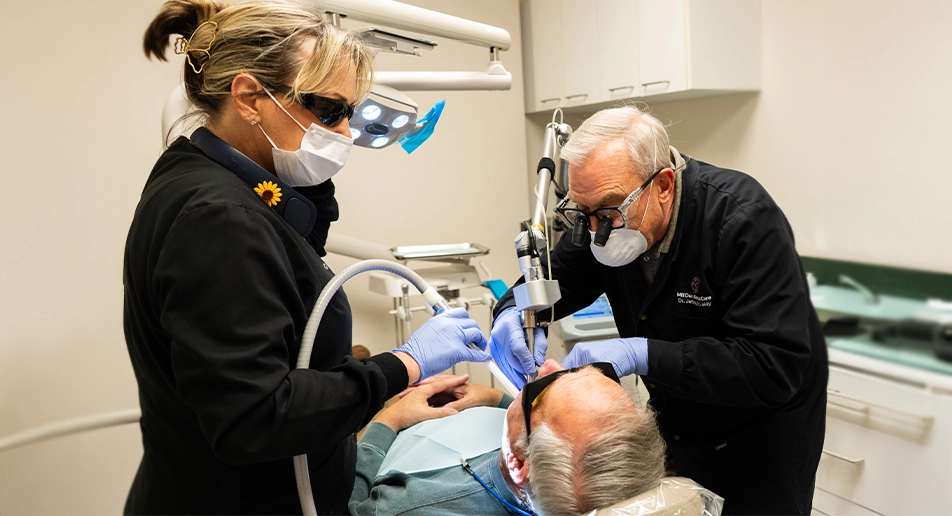
Professional Tooth Extractions With Advanced Sedation Options
Extractions are sometimes necessary when a tooth is severely damaged, weakened, or affected by other dental issues that prevent it from being restored. While removing a tooth is always considered a last resort, it can be the most effective way to prevent infection, alleviate pain, and protect your overall oral health. Extractions may be necessary for several reasons, including advanced tooth decay, gum disease, impacted teeth such as wisdom teeth, or to create space for orthodontic treatment. In some cases, removing a tooth is an important step in preparing for other treatments, like dental implants or dentures, helping to restore both the function and appearance of your smile.
Simple Tooth Extractions
Simple tooth extractions are a common dental procedure performed on teeth that are fully visible above the gum line. These teeth are not impacted, so no surgical incisions are needed. During the procedure, the area is numbed with a local anesthetic, and the tooth is grasped at its crown using forceps and removed with a quick, controlled motion.
Simple extractions are straightforward, typically do not require stitches, and can be completed in a single visit. Recovery is usually quick, with mild swelling, soreness, or jaw discomfort lasting a few days, and applying an ice pack can help reduce inflammation and support healing.
Surgical Tooth Extractions
Surgical tooth extractions are necessary when a tooth cannot be removed easily with standard techniques. This often happens when a tooth is impacted, positioned under the gum line, or has a complicated root structure. Wisdom teeth are the most common example of surgical extractions, but other teeth may require this approach if they are severely decayed or have long, curved roots.
Using digital X-rays, we carefully plan each surgical extraction to ensure the process is safe, precise, and as comfortable as possible. A surgical extraction involves making an incision in the gum, and occasionally the bone, in order to access the tooth. The area is typically closed with stitches, and medication may be prescribed to help manage post-procedure discomfort.
Wisdom Tooth Extractions
While patients do not always need to have their wisdom teeth removed, they rarely come in at the correct angle or fully erupt through the gums. This makes them them difficult to clean and more prone to infection, overcrowding, and pain. To help prevent future complications, digital X-ray photos allow us to monitor the development of wisdom teeth and determine the ideal time for removal.
When wisdom teeth are impacted, a surgical extraction may be required. This involves making a small incision in the gums and, in some cases, removing bone or sectioning the tooth for safe removal. Surgical extractions typically take longer to heal, with the socket closing in about six weeks and complete healing occurring over several months.
Sedation Dentistry for Tooth Extractions
Even though local anesthesia is always used to numb the area during a tooth extraction, we also offer sedation options for patients who prefer a greater sense of ease during their treatment. Whether you’re interested in light oral sedation or a deeper level of relaxation, our Virginia Beach sedation dentistry team will carefully review your medical history and comfort needs to determine the safest option for you.
What to Expect During a Tooth Extraction
Most extractions are straightforward and completed in under an hour, with recovery times varying depending on the complexity of the procedure and the number of teeth removed. Most extractions are straightforward and completed in under an hour, with recovery times varying depending on the complexity of the procedure and the number of teeth removed.
✔️ The area is numbed with Local anesthesia
✔️ The tooth is loosened and removed or surgically extracted
✔️ The empty socket is cleaned and, if necessary, stitched
✔️ Post-procedure extraction site care
Tooth Extractions - Virginia Beach, VA
Book your appointment today and take the first step toward a healthier smile. Our team is here to provide personalized dental care in a comfortable setting.
No, tooth extractions do not cause pain during the procedure, as your mouth will be completely numb. Some soreness or mild discomfort may occur once the anesthesia wears off, which is normal. Following your aftercare instructions can help minimize pain and support healing. Most discomfort begins to fade within 1–2 days, though complete healing depends on the type of extraction and proper formation of blood clots at the site.
How long does it take a surgical extraction to heal?
Surgical extractions take longer to heal because they involve removing teeth that haven’t fully erupted, such as impacted wisdom teeth. While the extraction site typically closes within six weeks, full healing can take several months. During the first few days, patients are advised to rest and limit physical activity.
What is a dry socket, and how can I prevent it?
A dry socket occurs when the blood clot that forms in the tooth extraction site becomes dislodged or dissolves too early, exposing the underlying bone and nerves. This can cause significant pain and delay healing. To help prevent a dry socket, avoid smoking, using straws, spitting forcefully, or poking the extraction site during the first few days after your procedure. Following all post-extraction instructions from your dentist is the best way to ensure proper healing and reduce the risk of complications.
Is there any risk in delaying wisdom teeth removal?
If your wisdom teeth aren’t causing problems, they may be monitored. However, impacted or problematic wisdom teeth are often best removed early to prevent infection, damage to nearby teeth, or other complications that can make treatment more complex later on.
How do I care for my mouth after an extraction?
Proper aftercare is essential for healing. Stick to soft foods, keep the area clean with gentle rinses, and take all prescribed or over-the-counter medications as directed. Avoid smoking, alcohol, straws, carbonated beverages, and strenuous activity for the first few days. Be certain to follow all instructions provided by your dentist.
Do I have to replace an extracted tooth?
Not every extracted tooth needs replacement, but gaps can cause shifting, bite changes, or aesthetic concerns. Teeth may drift or tip, leading to misalignment, crowding, or added pressure on other teeth. Common solutions include dental implants, bridges, or dentures, though some patients may leave the space empty if it doesn’t affect function or comfort.
Your Healthier Smile Awaits
Experience personalized dental care designed to keep your smile healthy, confident, and bright.